

What We Grow
Three crops, one harbor-to-table operation: Eastern oysters, sugar kelp, and Atlantic bay scallops.
Eastern Oysters
Crassostrea virginica
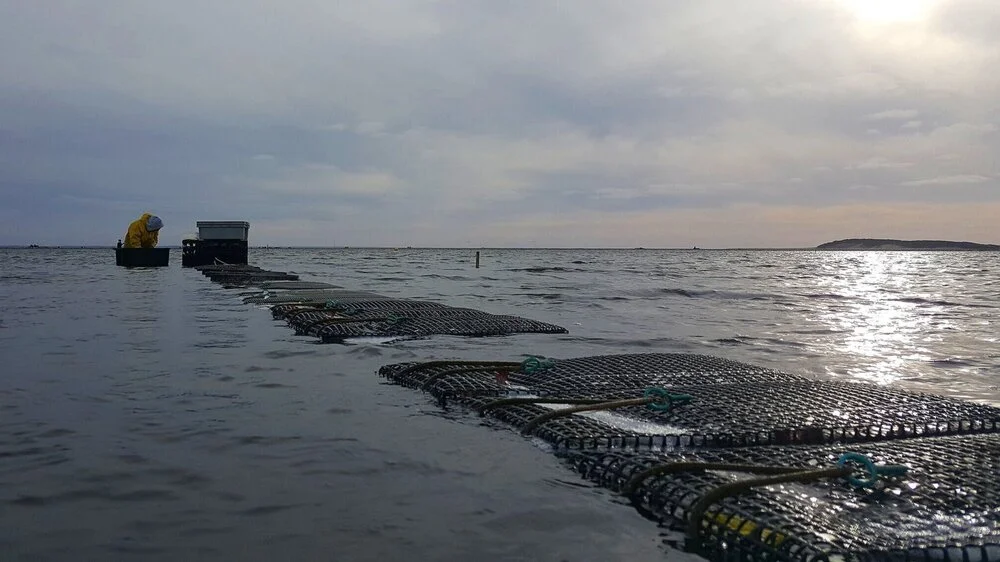
Ward Aquafarms has been commercially growing and selling market sized oysters (>3”) since 2013 from their aquaculture lease in Megansett Harbor located in North Falmouth, Massachusetts. The company now grows many more oysters, with intermediate growout locations in Wareham, Orleans and East Falmouth, Massachusetts.
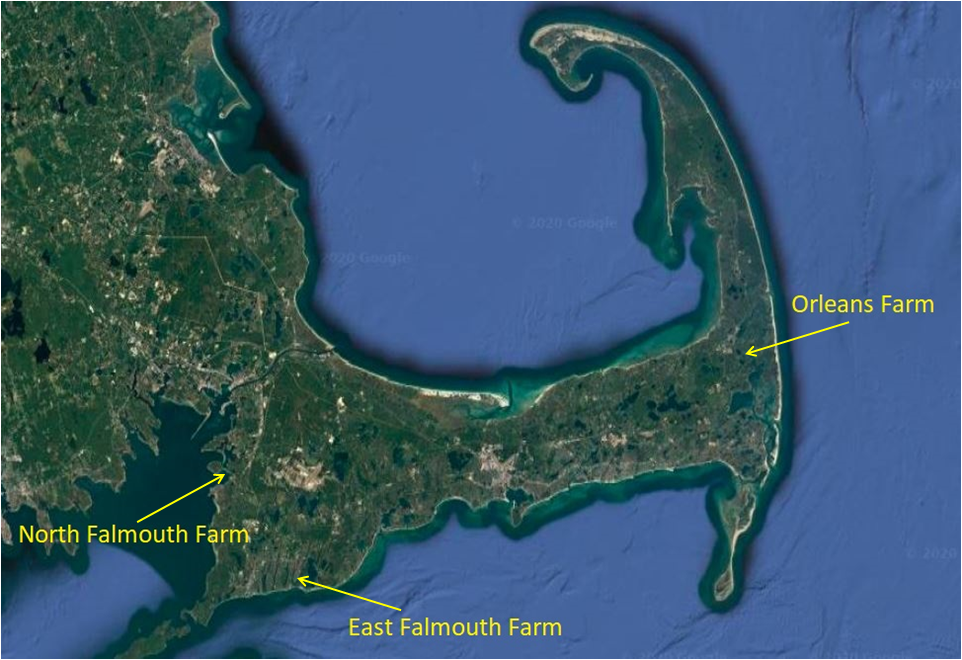
Cultivation of eastern oysters at Ward Aquafarms begins in the upweller nursery systems. Ward Aquafarms uses both landbased upwellers and floating upwellers known as FLUPSYs (Floating Upweller Systems).
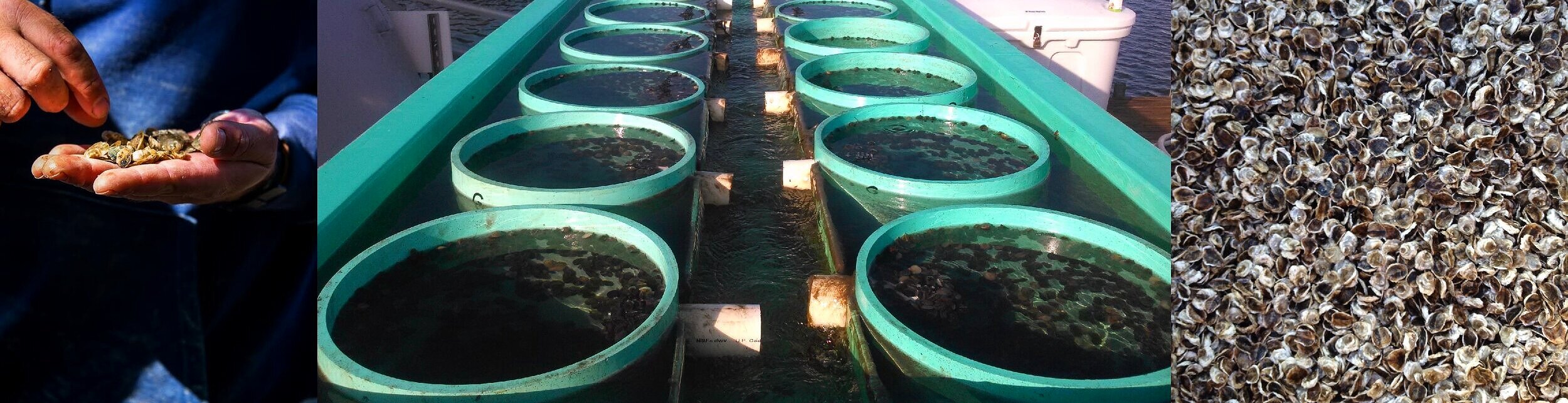
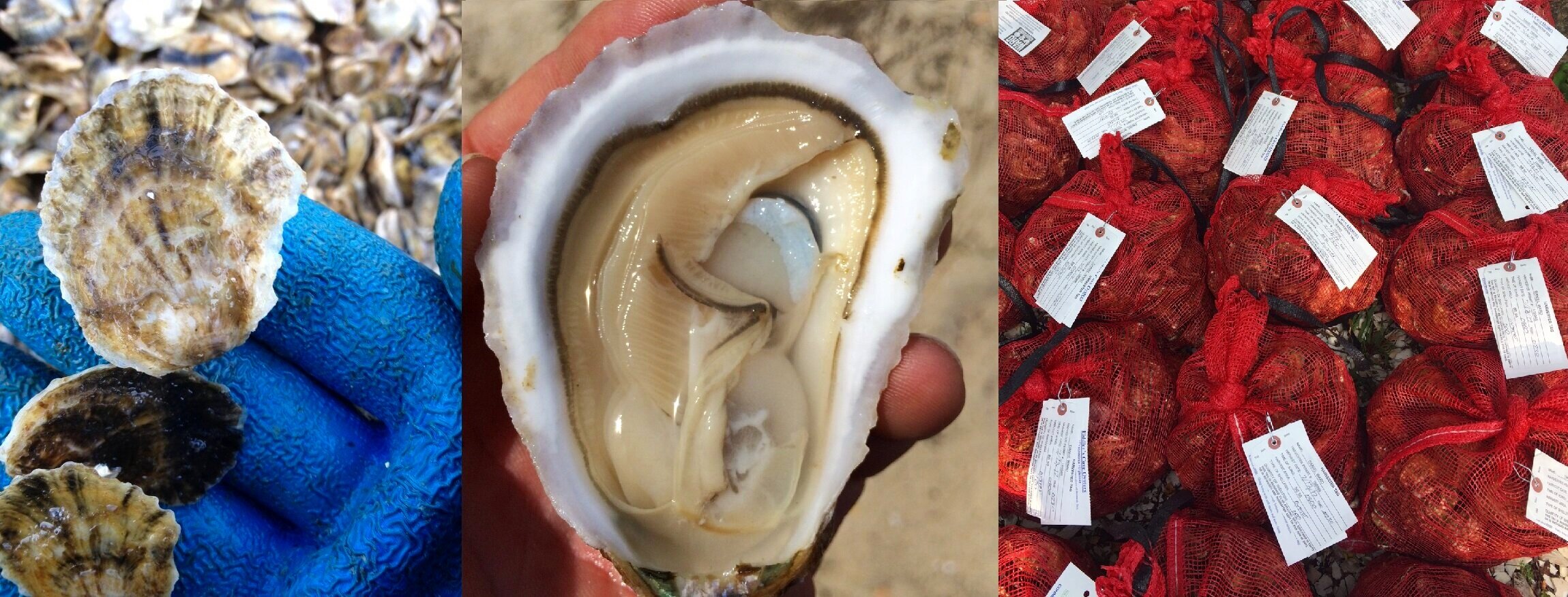
At the Orleans and East Falmouth locations, oysters are grown in sheltered areas where surface gear can be utilized. The use of surface gear in summer months gives the oysters access to high concentrations of food (i.e., algae) which is in high abundance near the surface of the water. Once the oysters average 2.5” in shell height, they can be sold as select sized oysters (>3”) and petite sized oysters (2.5”–3”) through Ward Aquafarms' distribution center in Wareham, Massachusetts.
Sugar Kelp
Saccharina latissima
Sugar kelp has been of interest to aquaculturists in the northeastern United States for the past decade or so. Seaweeds are often used dried, but fresh sugar kelp can be added to salads, and blanched kelp can be added to smoothies.
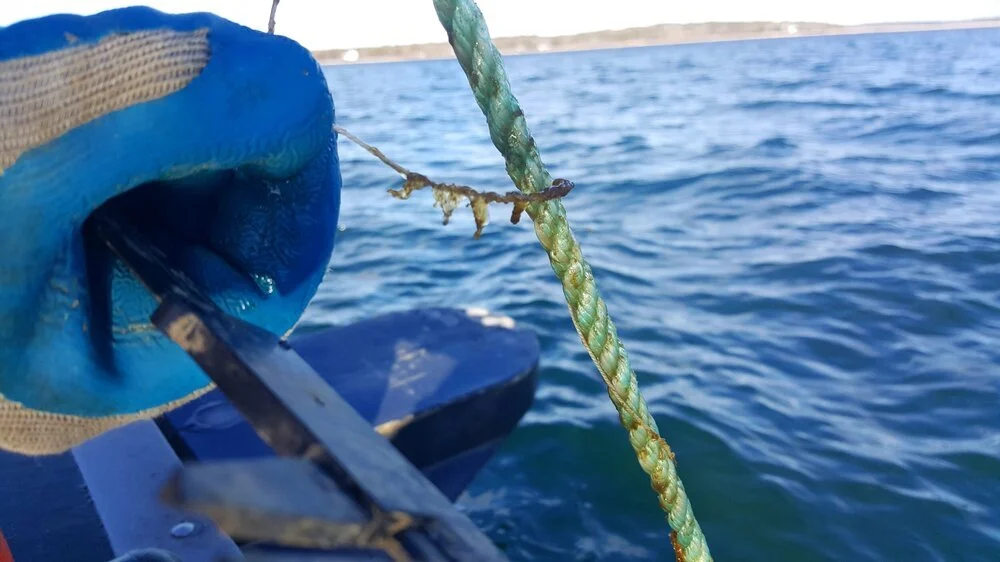
Ward Aquafarms first started growing sugar kelp in 2013, and although results have been mixed, each year new locations or new techniques are employed to improve yield. A study investigating Integrated Multi-Trophic Aquaculture (IMTA) with kelp and steelhead trout by Ward Aquafarms in the winter of 2019–2020 resulted in both excellent kelp growth, and reduced nutrient impact to the environment.
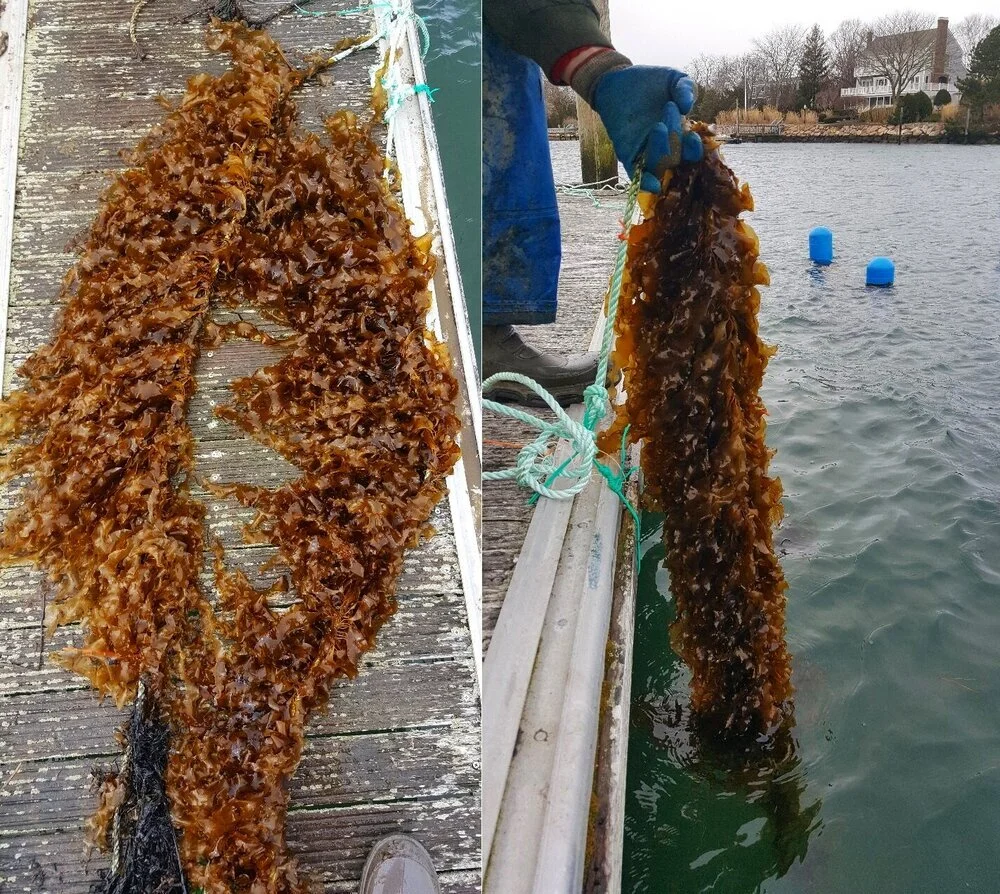
For more information on Ward Aquafarms' Integrated Multi-Trophic Aquaculture (IMTA) investigations, visit Steelhead Trout & IMTA research.
Bay Scallops
Argopecten irradians
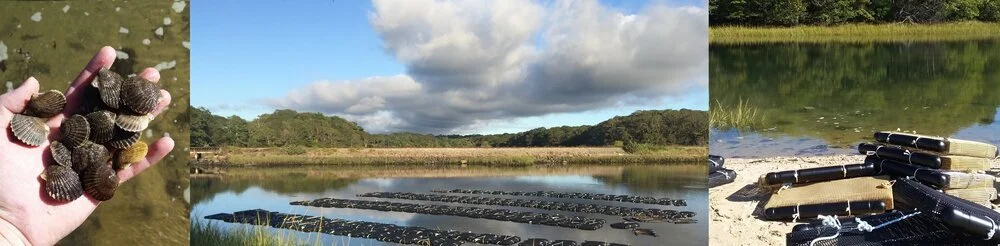
Bay scallops are often found as just the shucked meat, which is typically harvested from year two animals. Another delicacy is the year-one, in-shell scallop, which is prepared similar to mussels or littleneck clams, where the entire bivalve is eaten as opposed to just the adductor muscle. Ward Aquafarms produces both products, available seasonally.
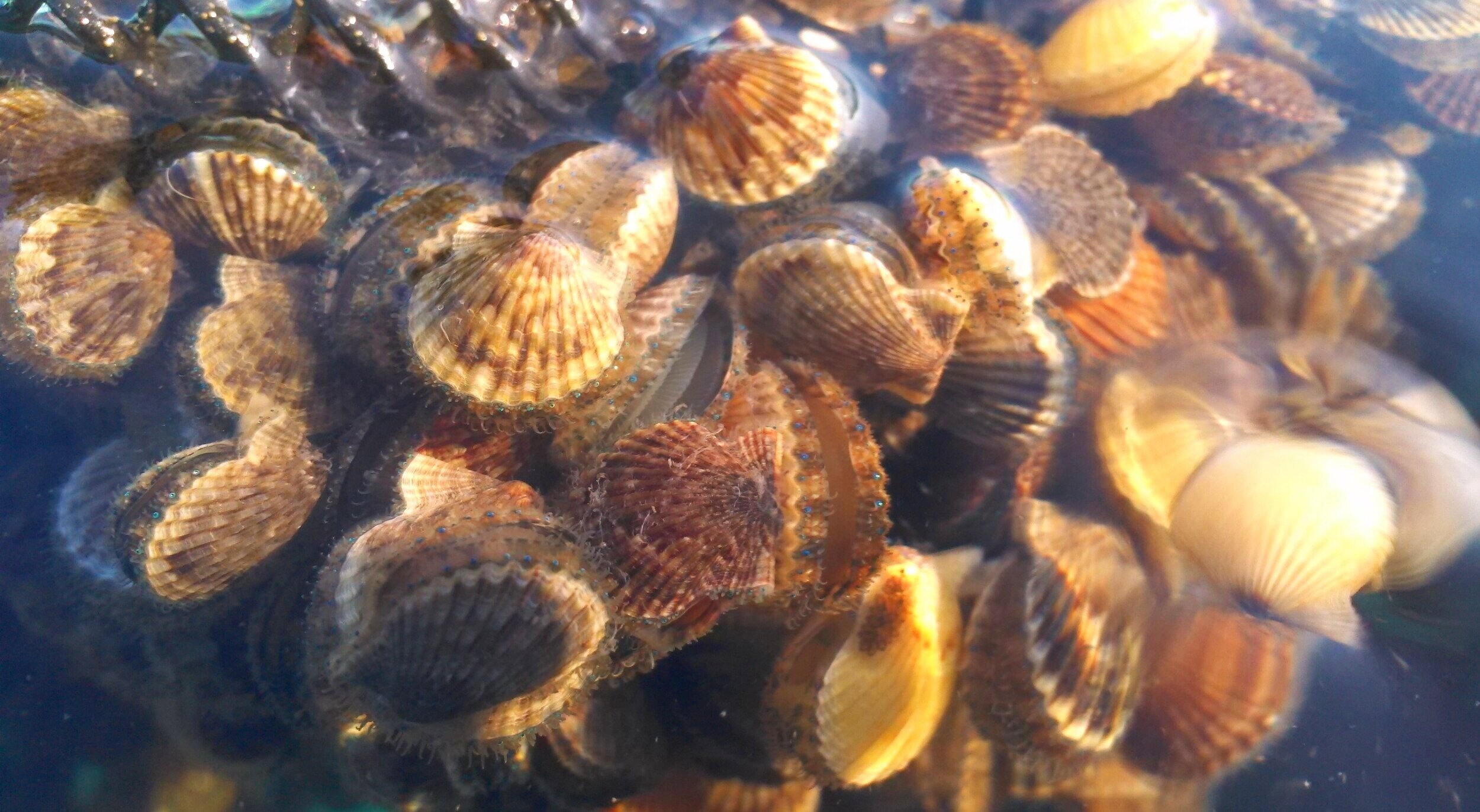
Ward Aquafarms grew bay scallops for the first time in 2014, and ever since has investigated numerous nursery and growout methods to make bay scallop aquaculture a more cost efficient crop for other interested growers. Ward Aquafarms now grows bay scallops through their entire lifespan from fertilized eggs to shucked year two adductor meats.
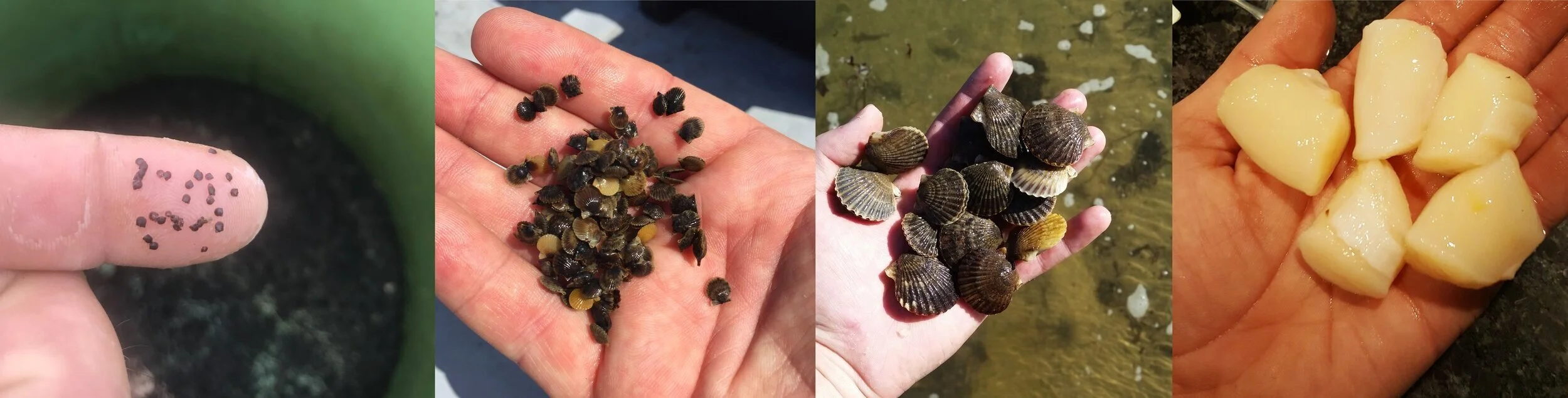
Ward Aquafarms spawns adult bay scallops at their hatchery in early spring where they also rear the bay scallops through their larval stages until settlement. Once the bay scallop larvae have morphed into their juvenile phase, the bay scallops are then moved to upweller and then downweller nursery systems. After two months of nursery culturing, the bay scallops are moved out of their nursery system and into growout gear.
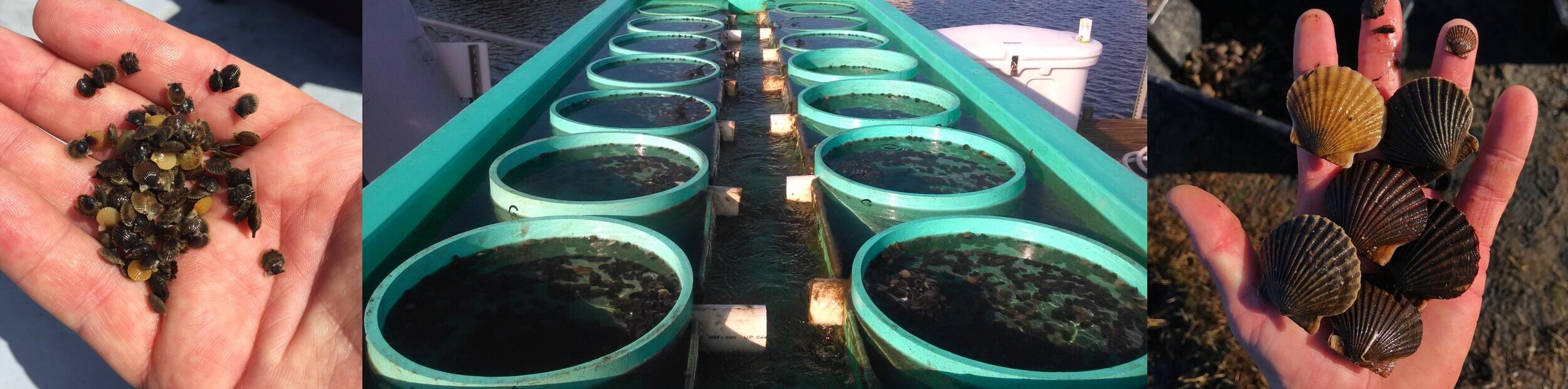
Additionally, Ward Aquafarms has worked with other commercial shellfish farmers on Cape Cod, MA as well as town, state, and government agencies to help promote bay scallop aquaculture as well as to help restore depleted wild populations.
Ward Aquafarms currently sells year one and year two bay scallop seed to town and state agencies for restoration purposes as well as some sales to other growers interested in pursuing bay scallops as a potential crop.
For more information on current and previous bay scallop research conducted by Ward Aquafarms and their collaborators, visit Bay Scallop research.