The Hatchery
Scallop Bay Shellfish Co Hatchery
In 2020, Ward Aquafarms, LLC partnered with Scallop Bay Shellfish Company to upgrade their hatchery and move the facility to a new location. Check out the new hatchery at scallopbayshellfish.com.
We produce high quality bay scallop, eastern oyster and hard clam seed at our facility in Pocasset, Massachusetts on Cape Cod. The hatchery was completed in March 2023, and seed of all three species was first produced that spring.
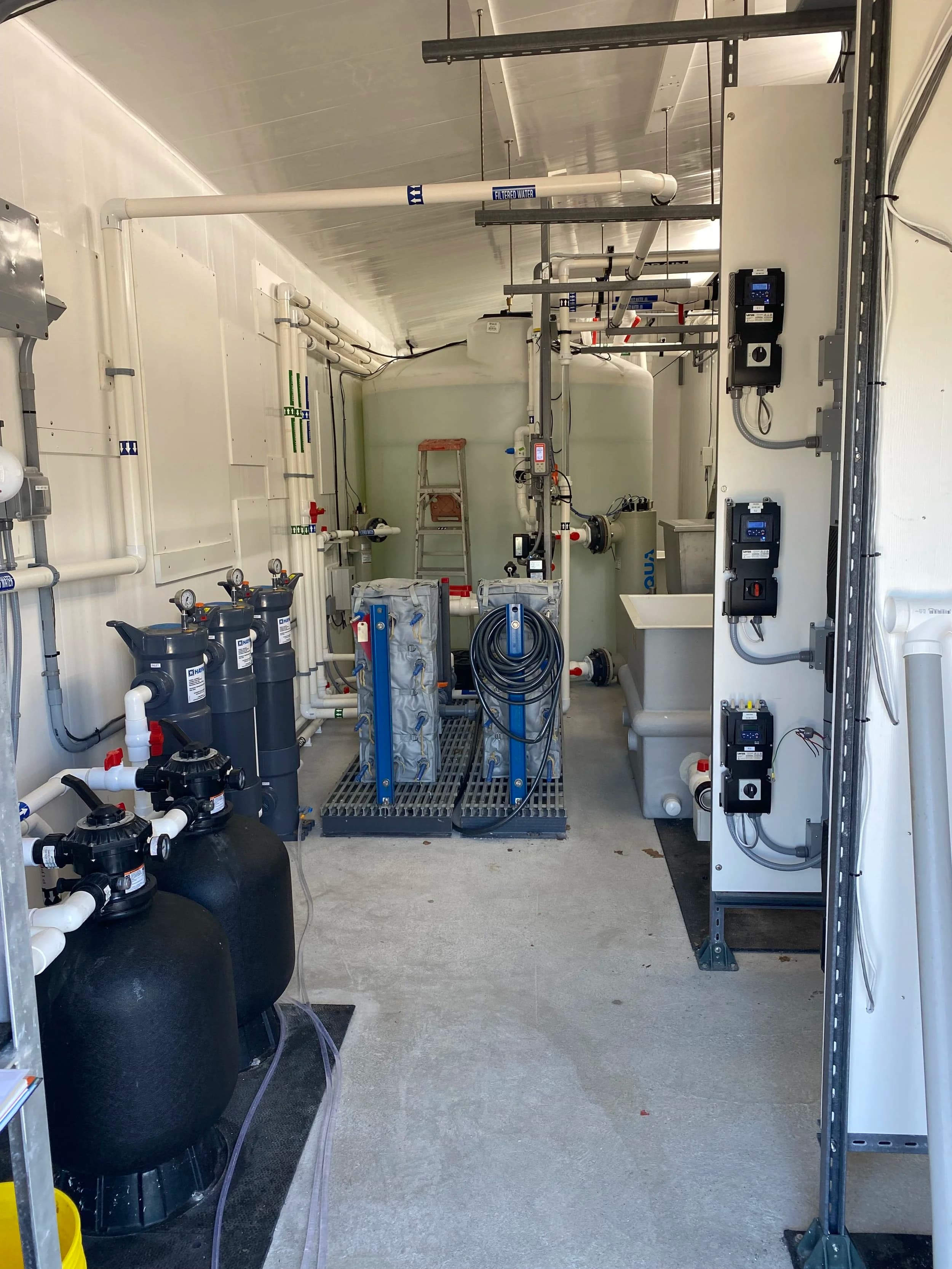
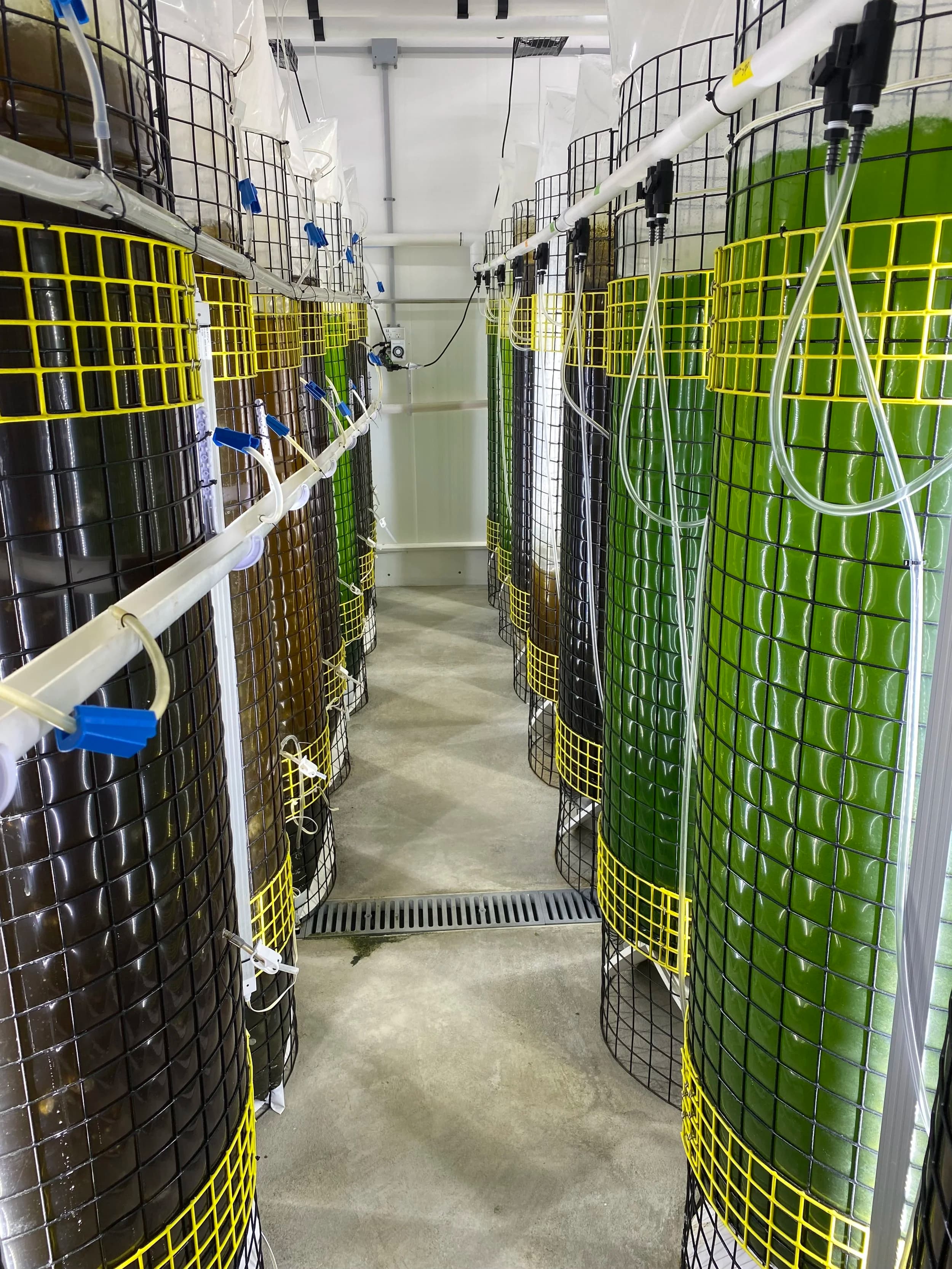
Ward Aquafarms currently cultures multiple algae species. It is important to grow multiple species of algae, for a mixed algae diet is essential for ensuring the development of healthy reproductive organs of adult bay scallops and eastern oysters. The health of adult shellfish during spawning is paramount and will directly affect the health of the larvae in the spawn. Algae species cultured by Ward Aquafarms include Tetraselmis sp., Isochrysis sp., Nannochloropsis sp. and the diatom species Chaetoceros sp. and Thalassiosira weissflogii.
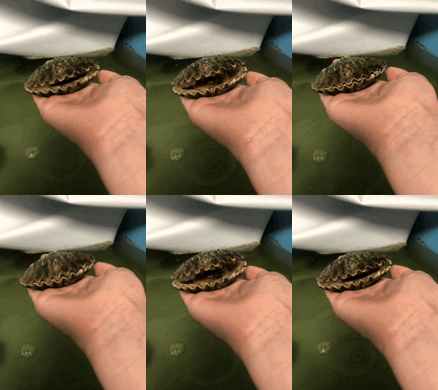
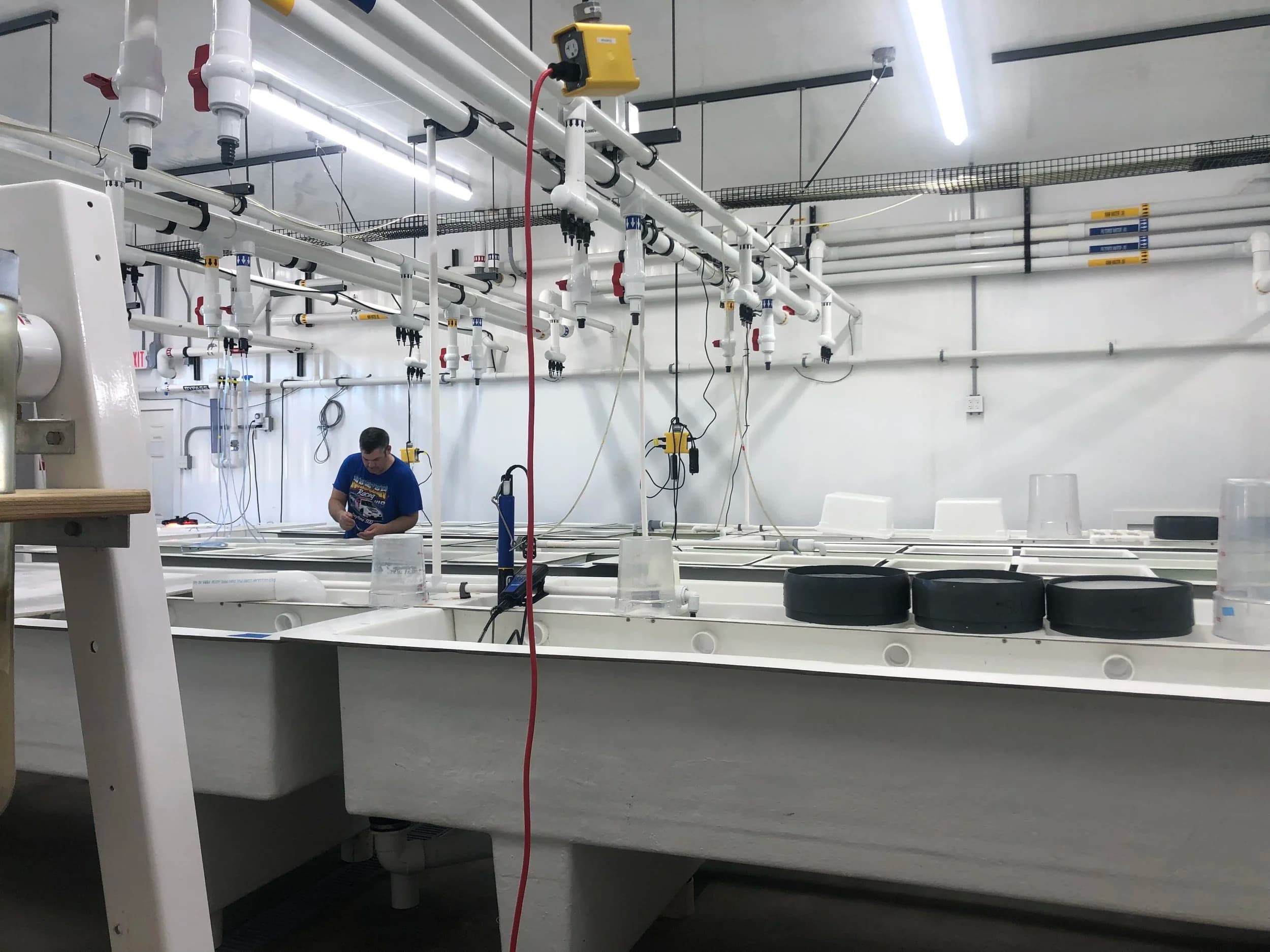
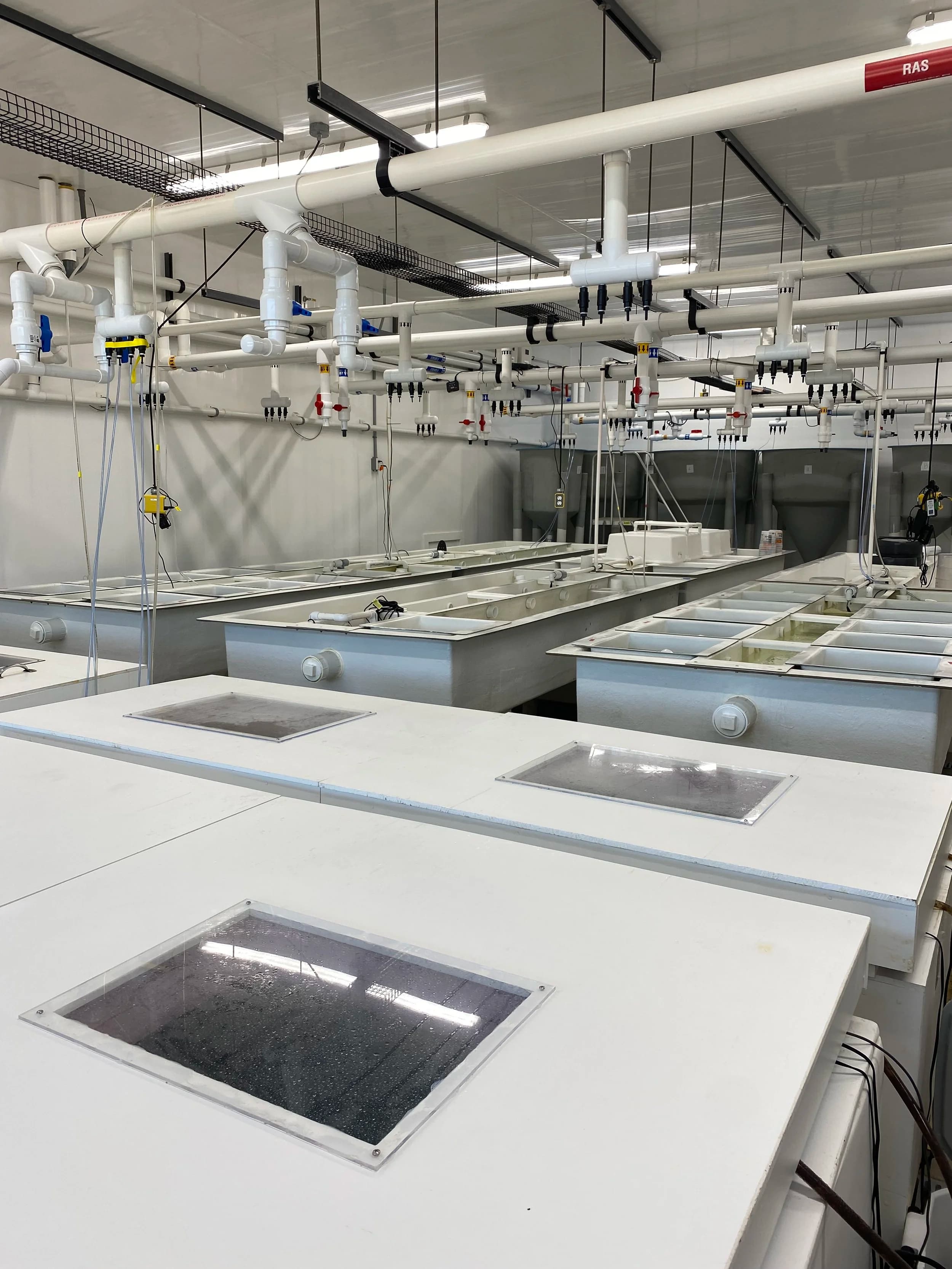
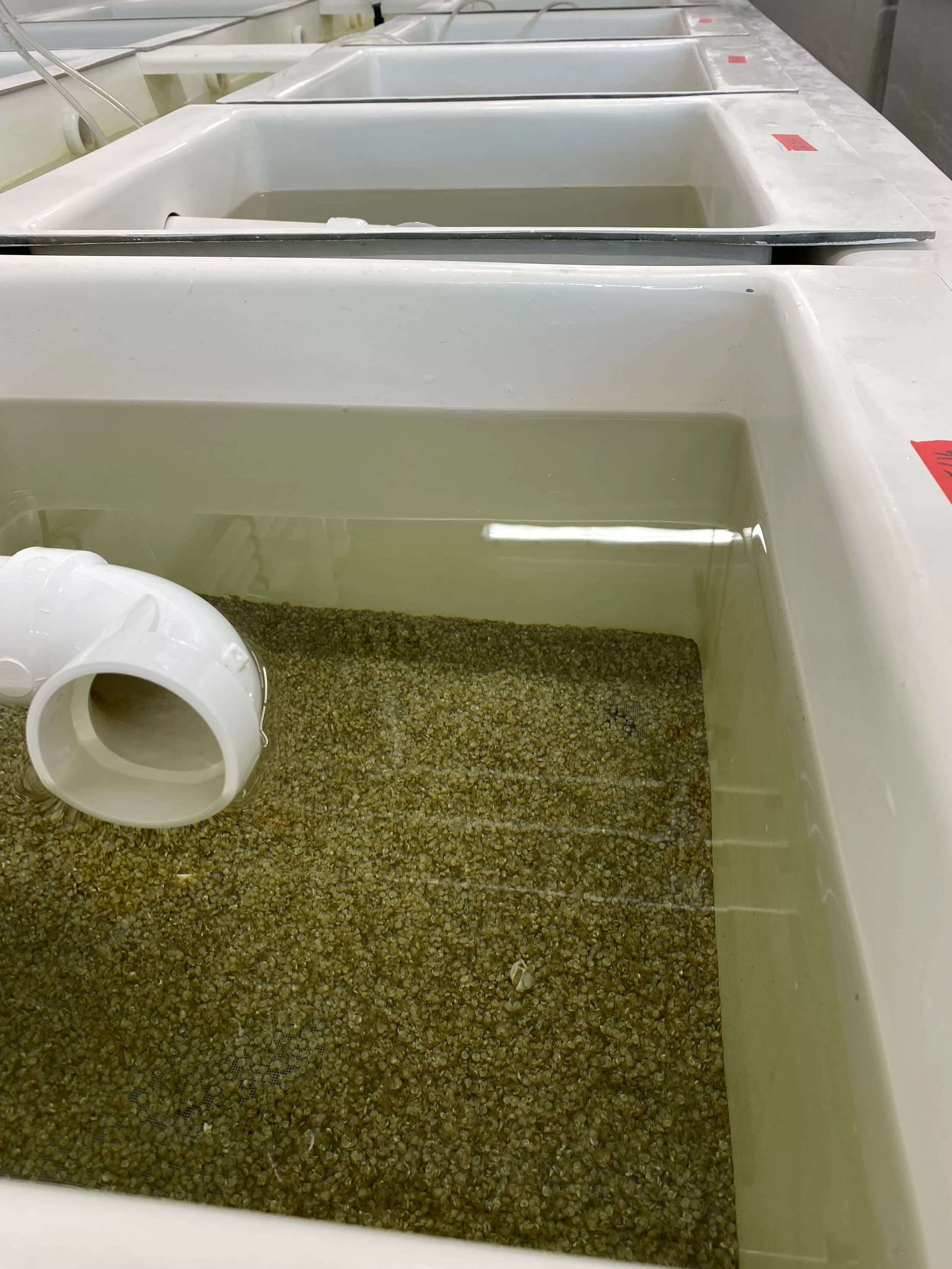
Raceway tanks are used for the conditioning of adult shellfish, such as bay scallops, prior to spawning. The raceway tanks can be outfitted with peristaltic pumps which provide a steady supply of mixed algae cultures. The process of culturing adult bay scallops and eastern oysters with the proper diet and water temperatures which promote healthy gonad development and spawning is known as conditioning.
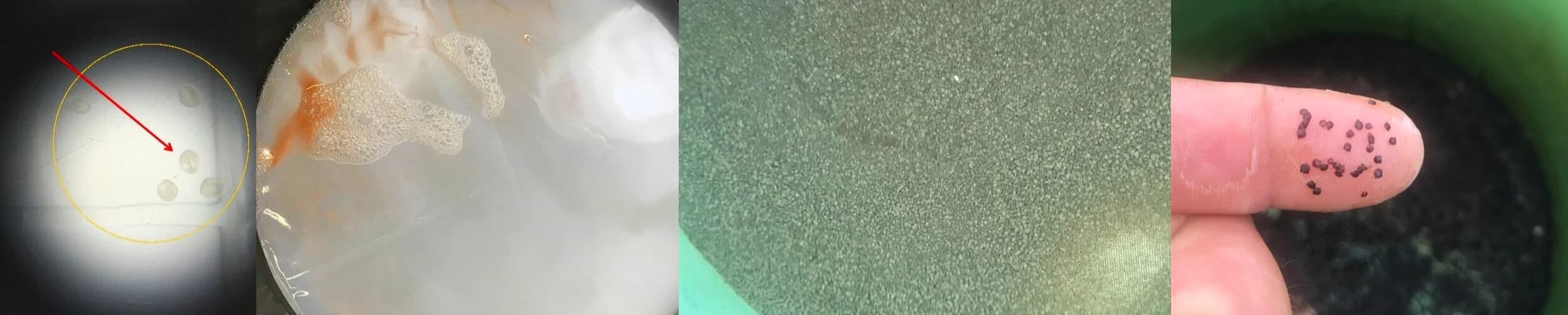
Once the adult shellfish have been successfully conditioned and their gonads are ripe (i.e. their reproductive organs are fully developed and the shellfish is ready to spawn), spawning is induced by a series of temperature shocks. The fertilized eggs are then transferred to the conical tanks. The conical tanks are also supplied a mixed algae diet to help ensure proper development through their larval phases to juvenile settlement.