

Tautog ( Tautoga onitis ) is a coastal wrasse which is a highly sought-after species by commercial and recreational anglers. Due to the high demand and stressed wild populations, tautog is an ideal candidate species for marine aquaculture. Additionally, tautog are voracious feeders of the invasive green crab ( Carcinus maenas ), which have caused widespread ecological damage along the east coast. The proposed project would refine culturing techniques for this high value food fish, while creating a market for an invasive species endemic throughout the Northeast region.
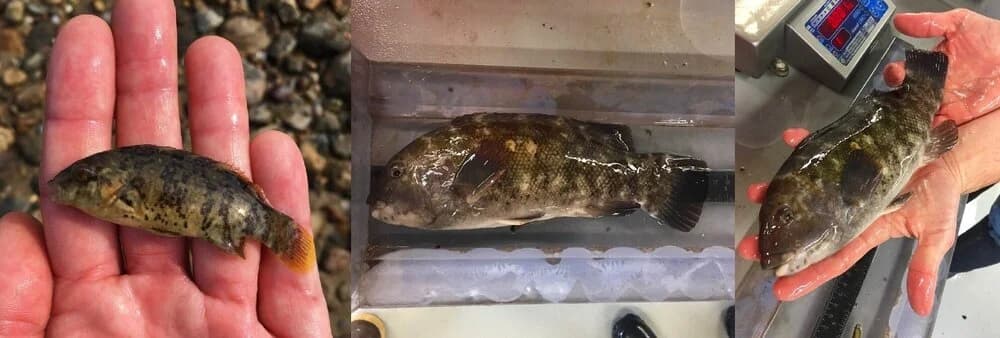
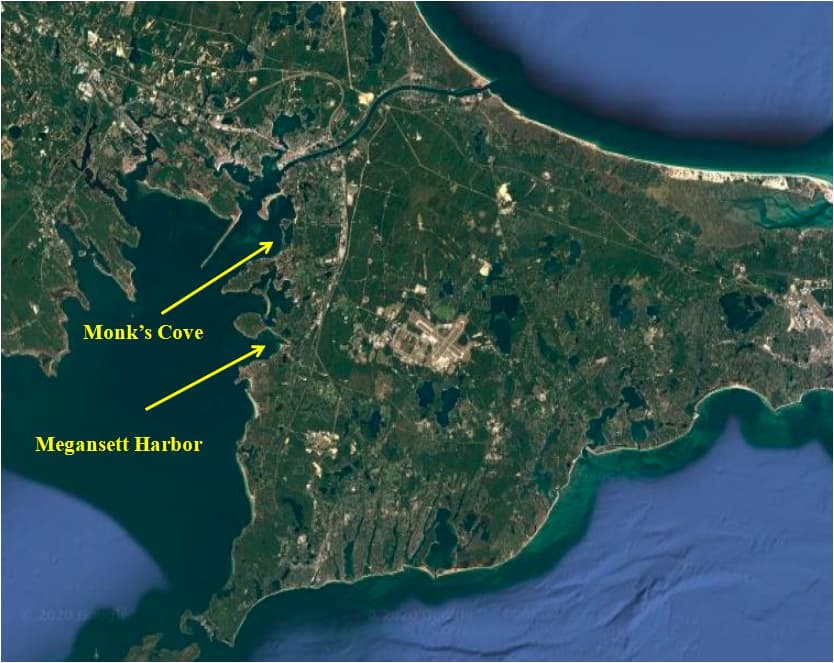
In 2019, Ward Aquafarms partnered with the University of Massachusetts Dartmouth to evaluate the use different diet treatments on the growth rates of aquacultured tautog. The major goal of the study was to assess if the addition of the invasive green crab to the diet of tautog resulted in higher growth rates than a diet consisting of commercially available fish feed. To assess the benefits of a green crab diet on aquacultured tautog, three different diets were tested: 1) Natural: green crabs only; 2) Zeigler: commercially available marine finfish diet; 3) Natural + Zeigler: green crabs supplemented with commercial feed. Tautog used in the study were obtained during the months of May and June 2019, year 1 tautog ranging from 5 to 10mm in size were obtained via a series of beach seines were conducted at Megansett Harbor in North Falmouth, MA and Monk’s Cove in Bourne, MA.
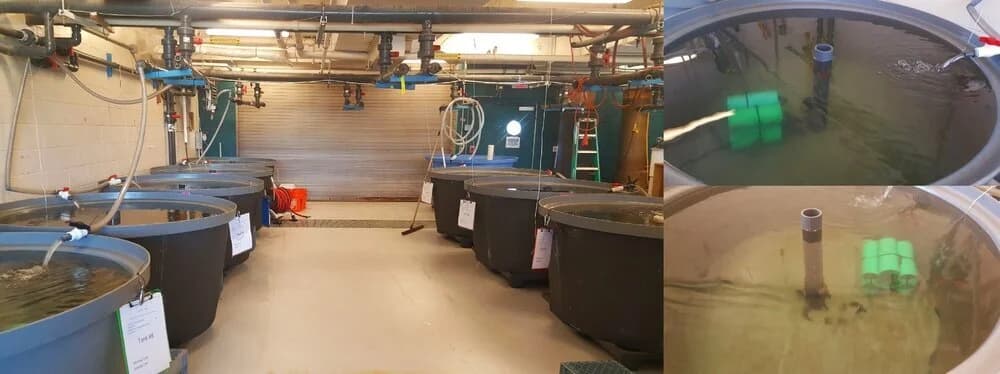
The tautog were separated into the three groups and fed the three aforementioned feeding regiments. The fish were held in recirculating systems at UMass Dartmouth’s wet lab located at the School for Marine Science and Technology (SMAST) in New Bedford, MA.
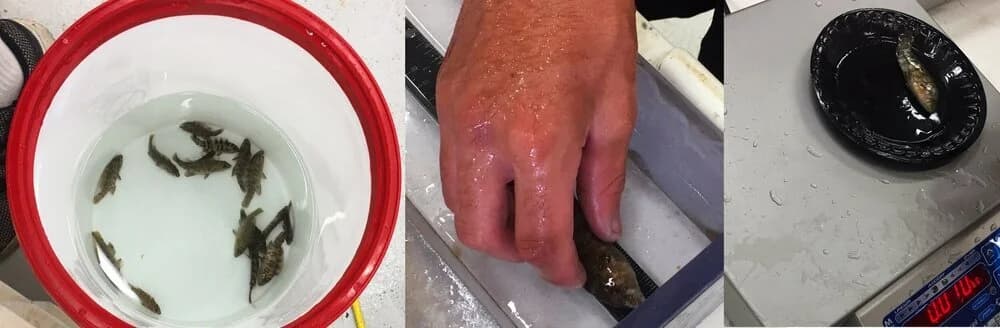
Each treatment was composed of three replicate 750L flow through tanks housing 50 tautog each. The replicate tanks had controlled temperature (~25 Celsius), salinity (30-32 psu), lighting (12L:12D) and aeration. Every 30 days, all tautog from each replicate were sampled for total length (cm) and weight (g).
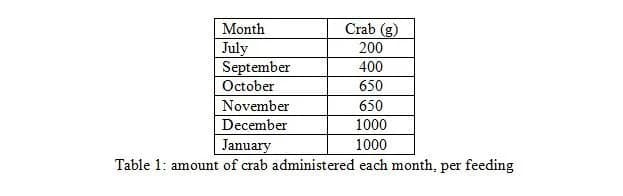
Feeding amounts were determined based on satiation and administered at each feeding interval. Increases in feeding were decided based on percent growth and satiation. Satiation was determined by whether there was any left-over food left in the tanks after feeding. The amount of commercial feed added was determined by 2% of the total body weight and observational record of uneaten food in the tanks. The amount of crab was determined by a total of 40% of the total weight of the fish, while also keeping track of whether or not all the food was being eaten in the tanks. Feeding to satiation while avoiding excess food in the tanks was important to ensure high water quality and growth.
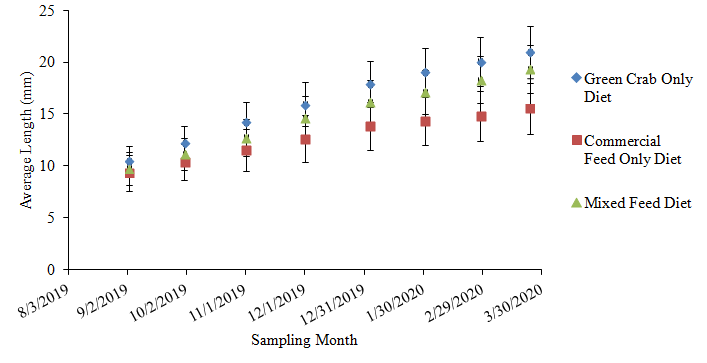
Phase one of Ward Aquafarms’ tautog aquaculture research was conducted from August, 2019 through March, 2020. Results from phase one of the study indicate that a green crab supplemented diet for aquacultured tautog could be viable as an aquaculture species. Tautog fed a diet of green crab only had an average daily growth rate of 0.52 mm/day (SD ± 0.10), which was a significantly higher daily growth rate compared to the growth rate of 0.31 mm/day (SD ± 0.1) for tautog fed a diet of commercial feed only. The growth rate of tautog fed the commercial feed only diet was also significantly lower than 0.46 mm/day (SD ± 0.09) for tautog fed a mixed diet of green crab and commercial feed.
Tautog fed a diet of only green crab had an average daily weight gain of 0.80 grams/day (SD±0.29) during the eight month feeding trial (August, 2019 - March, 2020) and had an average weight of 207.5 grams (SD±72.5) at the end of the experiment in April, 2020. The tautog fed a mixed diet of green crab and commercial feed during the seven month feeding trial had an average daily weight gain of 0.63 (SD±0.23) and an average final weight of 166.2 grams (SD±57.1). The average daily weight gains and average final weights of the tautog fed green crab and a mixed diet of green crab and commercial feed were significantly higher than the average daily weight gain of 0.34 grams/day (SD±0.17) and final mean weight of 92.9 grams (SD±42.6) of tautog fed a commercial feed only diet.
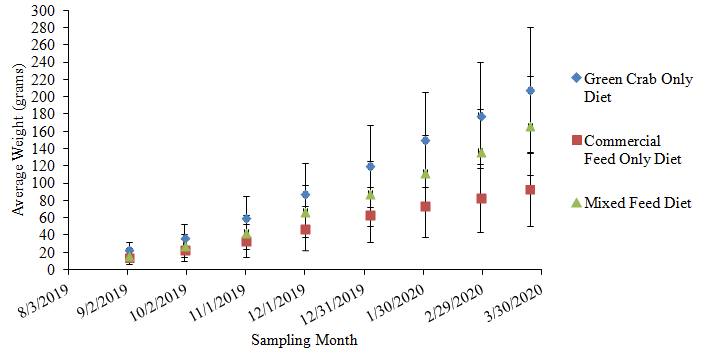
The results from the eight month tautog feeding trial conducted by Ward Aquafarms in collaboration with partners from University of Massachusetts Dartmouth indicate that the use of green crab significantly increases weight and length growth in tautog compared to a diet of commercially available fish food. Thus, the use of green crab as feed for tautog could help make tautog a viable species for aquaculture. Additionally, the harvesting of green grab for fish feed will help combat the negative ecological effects green crabs have on the environments they have invaded in North America. Although results from this study were very promising, Ward Aquafarms and their collaborators are further investigating the use of green crab feed in tautog aquaculture in order to fully understand the procedures to successfully aquaculture tautog on a commercial scale.